
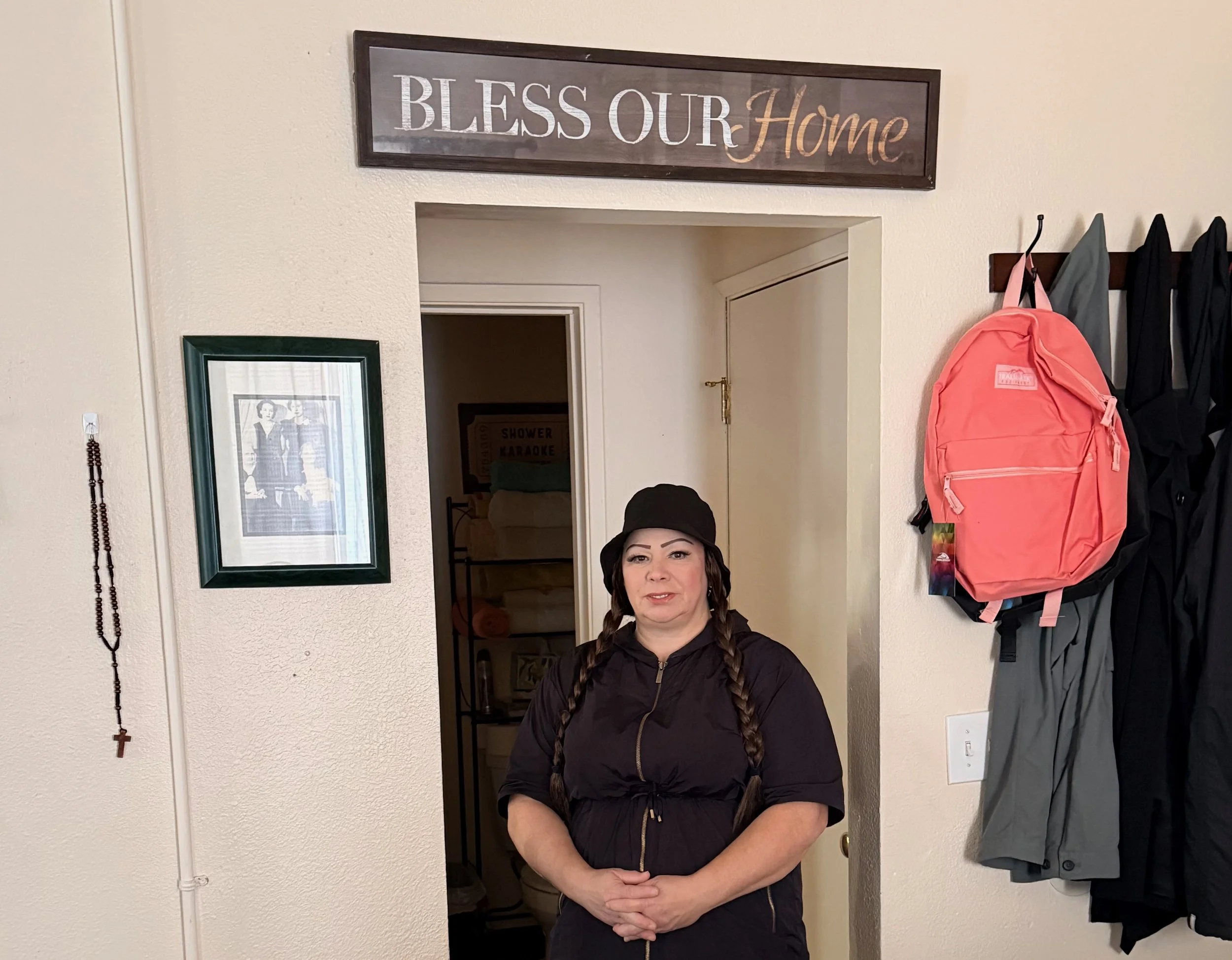
Jodi has made her apartment a warm and welcoming place to call home.
The one-bedroom apartment is warm, clean, and even modestly decorated for the holidays.
The Tacoma neighborhood is sketchy, and the building elevator often doesn’t work, but Jodi and husband Frankie can overlook that, knowing the rent-subsidized unit is far better than where they lived before—a car they couldn’t afford to fix.
Close to three years ago, the couple thought they were doing well. Their hard-labor jobs—his as a landscaping contractor and hers as a housecleaner—more than paid their $3,300-a-month rent and let them dine out frequently. They lived in a large rental house in an area where homes, they report, sold in the high six figures or beyond. They had poured money and sweat into fixing up the house, but the owner decided to sell and they had to leave.
Stung by shrinking incomes as the Covid epidemic shut down the market for their services, they chased work all over Seattle and Pierce County, only to find themselves looking down the double barrels of homelessness and hopelessness.
They were sleeping in their car in the dead of winter, with temperatures hovering at 16 degrees. Each had only a single small, thin blanket; Frankie took his off and placed it over a shivering Jodi, risking his own death from freezing. It was perhaps the first time Jodi thought about suicide. Then she found a place called GHP FISH.
“The first time they helped us, I was in dire straits,” she said in a recent interview. “I hadn’t showered in three weeks. I was on the internet going through resources and the FISH food bank came up. I left a message and a lady named Michelle called me back.”
Jodi apologized to Michelle for losing her composure, but said, “I’m so lost, I just don’t know what to do.”
Michelle calmed her down, Jodi said. “I told her our situation— we’re living in our car, we’re cold, we’re hungry. She said, ‘this is going to be temporary, but we’re going to help you.’” She found them temporary shelter, and the food bank filled other needs.
The car needed repairs running into the hundreds of dollars. GHP FISH got it fixed.
“All those times we were desperate, FISH was right there,” Jodi said. “If they hadn’t been, we would have lost our car and been on the streets.
“We were so desperate at that time, I might have taken my life. Seriously.”
Both Frankie and Jodi learned how the torment of homelessness can so often end marriages and other relationships.
“I don’t think there are many people who can survive like we did,” Frankie said.
“There wasn’t a day we weren’t fighting, though,” Jodi added.
They slogged on, getting a “No” with each job search, every bump in the road becoming a mountain. Along the way, they were betrayed by people they thought of as friends and received unexpected kindness from strangers.
When life was looking most bleak, the couple still knew they could rely on GHP FISH for food and encouragement. “They tell you straight out if they can help you or they can’t,” Jodi said. “They don’t judge you, they just help you.
“There’s nobody like FISH.”
She says that a lot.
Pierce County found them their Tacoma apartment, and the couple is now submitting bids for landscaping and housecleaning jobs.
While the end of their story is not yet written, Jodi and Frankie are on the path shown in GHP FISH’s mission statement: Neighbors helping neighbors who need food and other assistance as they move toward self-sufficiency.
Where do they see themselves in a year or two?
Jodi looks through her window to the neighborhood below.
“Not here!” she says.